
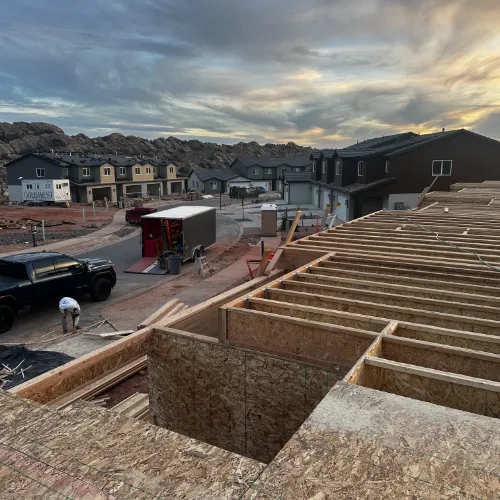
When you walk into a finished home or commercial building, your eyes naturally go to the paint colors, the kitchen design, or the fixtures that make the space feel complete. But beneath the drywall, siding, and finishes lies the most important part of the entire structure: the frame.
Framing in construction is often described as the skeleton of a building, and for good reason. It gives shape, strength, and support to everything else. Without a strong frame, even the most beautiful architectural designs simply wouldn’t hold up. In this article, we’ll break down what construction framing is, the different methods used, and why it plays such a vital role in the success of any building project.
What Is Framing in Construction?
At its core, framing is the process of assembling the structural support system of a building. It’s the step that takes a project from a concrete foundation to a recognizable house, office, or retail space. A frame is built from vertical and horizontal components, often wood or steel, that support the load of the building, distribute weight, and create the outline of each room. This framework serves as the foundation for installing walls, floors, ceilings, roofs, doors, and windows. Think of framing as the stage where a flat blueprint finally becomes three-dimensional. It’s when homeowners and contractors first start to see the true shape and scale of the project.
Types of Construction Framing
Not all framing is the same. Depending on the design, budget, and purpose of the building, different framing systems may be used. Here are the most common types:
1. Wood Framing
Wood framing, sometimes called “stick framing,” is the most common method for residential projects in North America. Builders use dimensional lumber (such as 2x4s or 2x6s) to create the skeleton of the home.
Advantages: Affordable, widely available, easy to work with, and adaptable to a variety of designs.
Disadvantages: Can be vulnerable to pests, moisture, and fire compared to other materials.
2. Steel Framing
Steel framing is often used in commercial construction or large residential projects. Instead of wood studs, contractors use light-gauge or structural steel to form the frame.
Advantages: Strong, durable, resistant to pests and fire, less prone to warping.
Disadvantages: More expensive than wood, requires specialized tools and training.
3. Balloon Framing
Once common in older homes, balloon framing uses long vertical studs that run from the foundation all the way up to the roofline. It’s less common today but can still be seen in some historic structures.
4. Platform Framing
Platform framing is the most popular method today for homes. Each floor of the house is built as a separate platform, with walls framed on top. This system is safer, more efficient, and uses standard lumber sizes.
5. Panelized and Modular Framing
In some cases, framing sections are pre-built offsite and then transported to the construction site for assembly. This approach can speed up timelines and reduce on-site labor costs.
Key Components of a Frame
Regardless of the method or material, every frame relies on a few core components:
- Studs: Vertical supports that form the walls.
- Joists: Horizontal supports for floors and ceilings.
- Rafters or Trusses: Supports for the roof.
- Beams: Larger, horizontal supports that carry heavy loads.
- Sheathing: Panels that cover the frame and provide a base for siding, roofing, and interior finishes.
Each piece works together to create a system that distributes loads evenly and ensures the building can withstand everyday use and environmental stresses.
Why Framing Is So Important
So why does framing matter so much in construction? Here are four big reasons:
1. Structural Integrity
The frame is what makes a building safe. A properly built frame ensures that walls don’t bow, floors don’t sag, and roofs don’t collapse. It distributes weight evenly and gives the building its strength.
2. Accuracy and Alignment
If the framing is even slightly off, it affects everything that comes after it: drywall installation, cabinetry, doors, windows, and roofing. Quality framing ensures every other trade can do their job properly.
3. Flexibility for Design
The frame is what brings an architect’s vision to life. Whether it’s a vaulted ceiling, open-concept living space, or large commercial floorplan, framing makes these designs possible.
4. Longevity of the Build
A strong frame means a building that will stand the test of time. It’s not just about how the structure looks when it’s finished. It’s about how it performs 10, 20, or 50 years down the road.
Common Framing Challenges
Framing may look simple when the walls go up quickly, but it comes with its own set of challenges:
- Weather Delays: Rain, snow, or extreme temperatures can slow down framing projects.
- Material Issues: Warped lumber or supply chain delays can affect timelines.
- Precision Requirements: Even small mistakes can create costly ripple effects.
- Coordination with Other Trades: Framers must work closely with plumbers, electricians, and HVAC installers to ensure everything fits properly.
- Experienced framing crews anticipate these challenges and have systems in place to keep projects on track.
The Role of Professional Framers
While DIY is possible in some home improvement projects, framing is not one to tackle without experience. Professional framers bring:
- Technical Knowledge: Understanding load-bearing walls, spans, and codes.
- Efficiency: Skilled crews can frame an entire home in days, not weeks.
- Accuracy: Professionals have the tools and training to ensure measurements are exact.
- Safety: Framing involves heavy lifting, ladders, and power tools. All areas where expertise prevents accidents.
Hiring experienced framers ensures that the rest of the construction process can move forward smoothly.
To Wrap Things Up
Framing might not be the most glamorous part of construction, but it’s certainly one of the most important. It’s the invisible backbone that determines the strength, accuracy, and longevity of a building. From small residential homes to large commercial projects, quality framing sets the stage for success.
When you invest in expert framers, you’re not just building walls. You’re building confidence that your project will stand strong for years to come.