
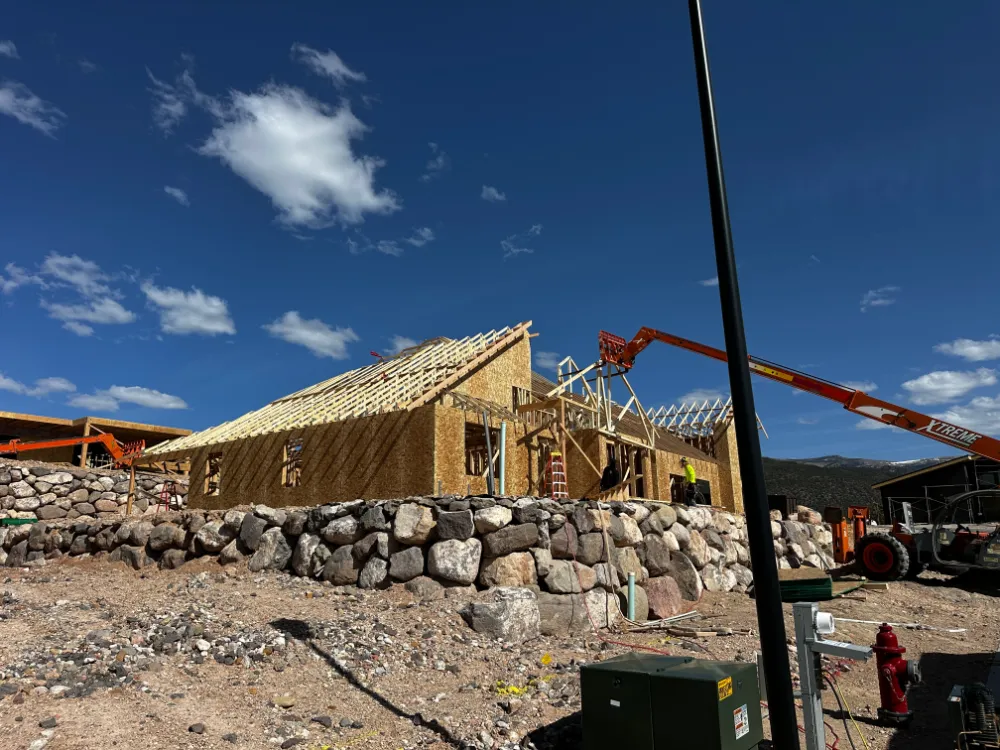
Moisture is one of the most overlooked factors in construction framing, yet it has one of the greatest impacts on how a structure performs over time. Framing lumber may look solid and straight when it is first installed, but moisture levels and drying conditions can dramatically change how that lumber behaves after construction begins.
At Keep Hammering Construction, we take moisture management seriously because we understand how easily it can undermine even the best framing work. Knowing how moisture and warping affect framing helps homeowners and general contractors avoid costly repairs and long term issues.
Why Moisture Matters in Framing
Wood is a porous, organic material. It absorbs and releases moisture depending on its environment. When lumber contains excess moisture at the time of installation, it will shrink as it dries. When lumber is exposed to ongoing moisture, it may swell, soften, or degrade.
These changes may seem minor at first, but they affect the accuracy, stability, and durability of the entire structure. Moisture related movement is one of the leading causes of framing problems discovered after construction is complete.
Understanding Moisture Content in Lumber
Moisture content refers to the amount of water present in wood, expressed as a percentage of the wood’s dry weight. Framing lumber is typically kiln dried to reduce moisture content before it reaches the jobsite, but that does not guarantee it remains dry.
Lumber can absorb moisture during transport, storage, or while sitting uncovered on site. Rain, snow, ground moisture, and humidity all contribute to rising moisture levels.
If lumber is installed while moisture content is too high, shrinkage and movement are inevitable.
How Shrinkage Affects the Structure
As wet lumber dries, it shrinks across its width and thickness. This shrinkage leads to several common issues:
- Gaps forming between framing members
- Nail pops and fasteners pulling through drywall
- Cracks at joints and seams
- Uneven surfaces for finishes
- Doors and windows going out of alignment
These problems often appear months after the project is completed, leaving homeowners confused and frustrated.
Shrinkage is not a defect in the wood. It is a predictable result of moisture imbalance. Proper framing accounts for this behavior and minimizes its impact.
Warping, Twisting, and Bowing Explained
Warping occurs when lumber dries unevenly. One side of the board dries faster than the other, causing it to twist, bow, or cup.
- Bowing causes a board to curve along its length
- Twisting causes corners of the board to rotate in opposite directions
- Cupping causes the edges of the board to rise or fall
When warped lumber is installed in walls, floors, or ceilings, it creates uneven surfaces that are difficult to correct later.
Experienced framers identify warped boards before installation and either correct or replace them.
How Warped Framing Affects Finishes
Framing accuracy directly affects finish quality. Warped studs lead to drywall that does not sit flat. This results in visible waves, cracks, and uneven seams.
Cabinets and countertops rely on straight, level walls. Warped framing makes installation difficult and may require shimming or adjustments that compromise appearance and function.
Trim, doors, and windows also suffer when framing moves or twists. These finish issues are often blamed on materials or installers when the real cause is framing movement beneath the surface.
Moisture and Structural Integrity
Excess moisture does not only affect appearance. It can weaken structural connections over time. Fasteners may loosen as wood shrinks. Repeated swelling and drying cycles can reduce the strength of joints.
In severe cases, prolonged moisture exposure can lead to rot or mold, particularly in concealed areas where air circulation is limited. These conditions compromise both structural integrity and indoor air quality.
Preventing moisture problems at the framing stage is far easier than repairing them later.
Jobsite Conditions Play a Major Role
Even high quality kiln dried lumber can absorb moisture on site. Jobsite conditions such as standing water, poor drainage, or lack of protection increase risk.
Proper framing practices include:
- Keeping lumber elevated off the ground
- Covering materials during rain or snow
- Scheduling framing to minimize prolonged exposure
- Allowing lumber to acclimate when needed
Professional framing crews manage these details daily to protect material performance.
Engineered Lumber and Moisture Resistance
Engineered wood products offer greater consistency and stability than traditional dimensional lumber. Because they are manufactured under controlled conditions, engineered products contain lower and more uniform moisture levels.
While engineered lumber is not immune to moisture, it is far less prone to warping and twisting. For long spans and critical structural elements, engineered products provide added protection against movement.
Choosing the right materials for the right application reduces moisture related issues significantly.
Climate and Seasonal Changes Matter
Climate affects how lumber behaves over time. Regions with high humidity or large seasonal temperature swings experience more wood movement.
Framing contractors familiar with local conditions understand how to plan for these changes. This includes selecting appropriate materials, allowing for expansion and contraction, and using construction techniques that minimize stress on the structure.
Ignoring climate considerations leads to predictable problems down the road.
Why Moisture Problems Often Go Unnoticed at First
Many moisture related framing problems do not appear immediately. They develop slowly as the building dries and adjusts to its environment.
By the time issues become visible, finishes are complete and repairs are disruptive and costly. This delayed timeline is why moisture management is often underestimated.
Quality framing anticipates these changes rather than reacting to them later.
How Professional Framers Prevent Moisture Related Issues
Experienced framing contractors take proactive steps to manage moisture risks. These include:
- Inspecting lumber for moisture and warping
- Rejecting unsuitable materials
- Protecting materials on site
- Using proper fastening techniques
- Coordinating timing with other trades
At Keep Hammering Construction, moisture control is part of our framing process because long term performance matters.
Moisture Control Is Essential to Lasting Framing
Moisture and warping are not minor concerns. They are among the leading causes of framing related problems in residential and commercial construction.
Understanding how moisture affects lumber helps homeowners and builders make smarter decisions and avoid costly repairs. Proper material selection, storage, and installation protect the structure from movement, finish issues, and long term damage.
Quality framing is not just about building quickly. It is about building correctly with the future in mind.